A bridge is a replacement tooth that is attached to other teeth in your mouth to keep it in place. There are various designs of bridge suitable for different situations. For each type of bridge, the replacement tooth is made from a type of ceramic. This creates a lifelike appearance, is hard wearing, feels smooth to the tongue and is hypoallergenic.
The sections below describe the different types of bridges with their pros and cons
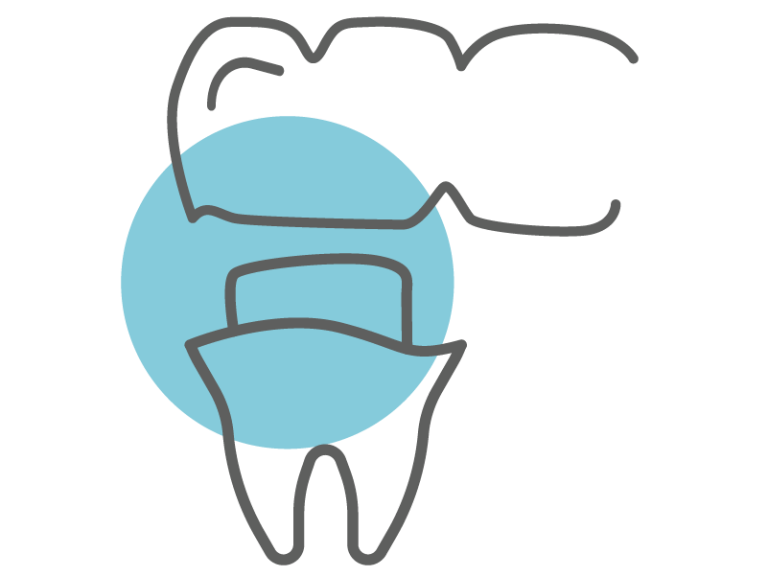
In this style of bridge, the replacement tooth has a thin “wing” of material joined to it. This is cemented to the back of the adjacent tooth which keeps in in place and hides the wing.
Fixed replacement, unlike a denture.
Lifelike appearance.
Minimal shaping of the support tooth needed (as compared with the conventional bridge below).
Lower cost than other bridges and implants.
Quicker treatment time than implant or denture options.
Only really suitable for single tooth gaps and better used for front teeth.
The support tooth should be free from/have only a small amount of filling material and the gum condition must be excellent around it.
The bridge relies entirely on the cement bond to keep it in place, unlike the conventional bridge below. This style of bridge tends to fall out more frequently than a conventional bridge. Usually it can be recemented again.
Can make cleaning around the support tooth more difficult and increase the chances of developing decay in this tooth. So only really suitable for people who clean their teeth well and who have a low risk for dental decay.
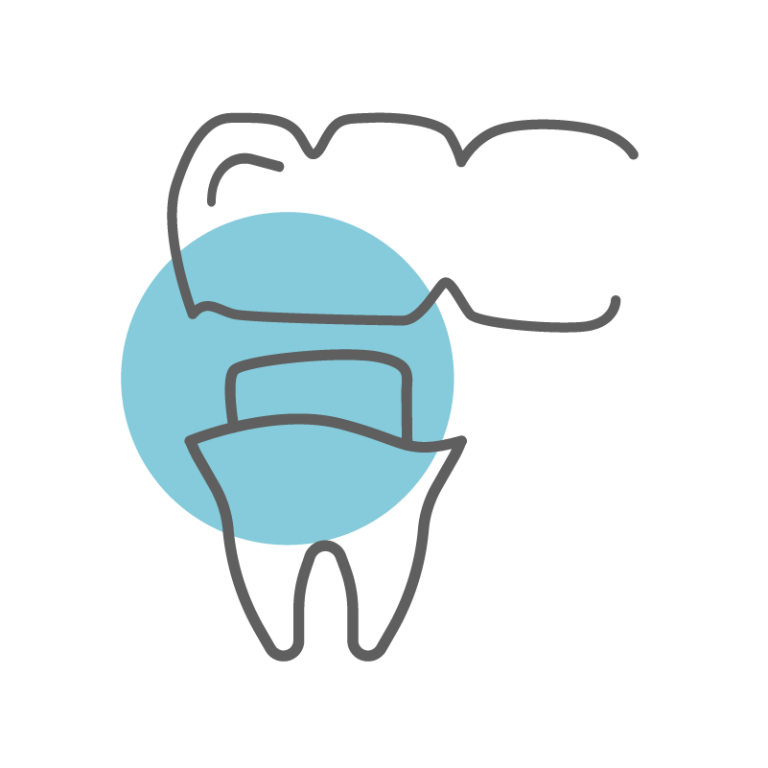
This style of bridge looks like 1 or more hollowed out porcelain tooth/teeth joined to the replacement tooth in the middle. The hollowed out tooth/teeth are cemented over the top of the support teeth This style of bridge requires shaping of the support teeth as if they were going to have crowns..
Within this category there are many different variations of design depending on which teeth are missing and where. This style of bridge can be used to fill multiple gaps.
Fixed replacement, unlike a denture.
Lifelike appearance.
Lower cost than implant.
Quicker treatment time then implant or denture.
Can be used to replace multiple missing teeth at the front and the back of the mouth.
Using shaped support teeth increases the stability compared to the resin retained design, so they tend to stay cemented for longer.
The support teeth have to be shaped for the bridge. Taking away tooth substance during the shaping can weaken the support teeth and irritate the nerve inside the tooth. Sometimes the nerve needs removing after the shaping process, which wouldn’t have been needed otherwise.
Can make cleaning around the support tooth more difficult and increase the chances of developing decay in this tooth. So only really suitable for people who clean their teeth well and who have a low risk for dental decay.
If the bridge fails eventually due to decay around the edges, the reconstruction afterwards can be complex.
Over time the gum can recede around the support teeth which reveals the edge of the bridge. This can appear dark and be noticeable when you smile.
It is possible to use dental implants to support a bridge instead of using natural teeth.
Implant treatment makes it possible to have a fixed bridge where there are no teeth present. Before implants, a removable denture would have been the only option. Having teeth that are fixed rather than removable can be life changing.
Doesn’t rely on natural teeth for support so no risk of decay after it is placed. Also a reduced risk of breakage as the implant components are stronger than a tooth root.
Great cosmetic appearance possible as the join between the porcelain and the metal of the implant is under gum level and can’t be seen.
Implant treatment is a process and takes more time and has higher cost than other options.
Implants can still fail if they are not looked after properly.
The screws used to hold the bridge on to the implant can become loose and need tightening or replacing so as with all dental treatment this is not “maintenance free”.
Not everyone is suitable for implant treatment.
Our fees for bridges:
See below to meet the staff who perform the procedures on a daily basis.