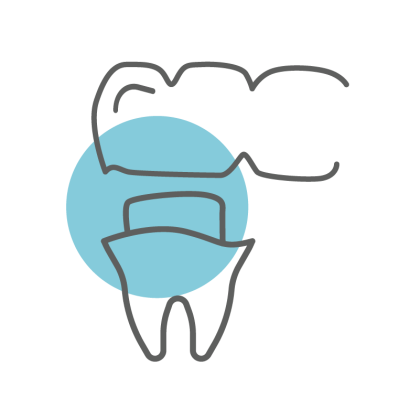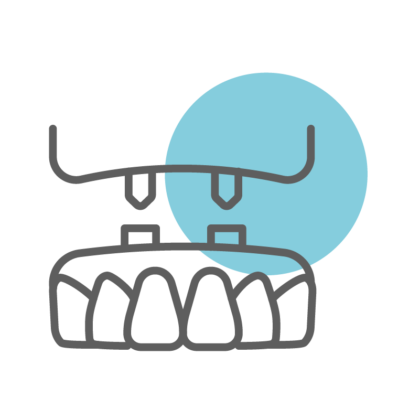
A crown is a shell of material that is cemented over a pre-shaped tooth. Each one is custom made to fit that particular tooth. It can be made from metal, a porcelain ceramic or a combination of the two. There are a number of reasons why it might be necessary to have a crown:
• If the tooth has a large filling, then the remaining walls of natural tooth may be thin and liable to break. A crown holds the tooth and filling together to prevent pieces breaking away. This situation often occurs with teeth that have had root canal treatment.
• If the cavity within the tooth is very large it may be difficult to create the “perfect” tooth-shaped filling. This can lead to food packing and difficulty cleaning. A crown will restore the natural shape of the tooth and eliminate these problems.
• Teeth can become dark and discoloured for various reasons. Placing a crown over the tooth can disguise this and make it match the other teeth again.
• A tooth may develop a crack which runs part way through it causing pain when biting. If caught early, a crown can prevent the tooth flexing and the crack from becoming worse and so stop the pain.
• Over time teeth can wear down, particular if a person grinds their teeth or has a strong bite. Crowning the affected teeth can restore them to their original shape.
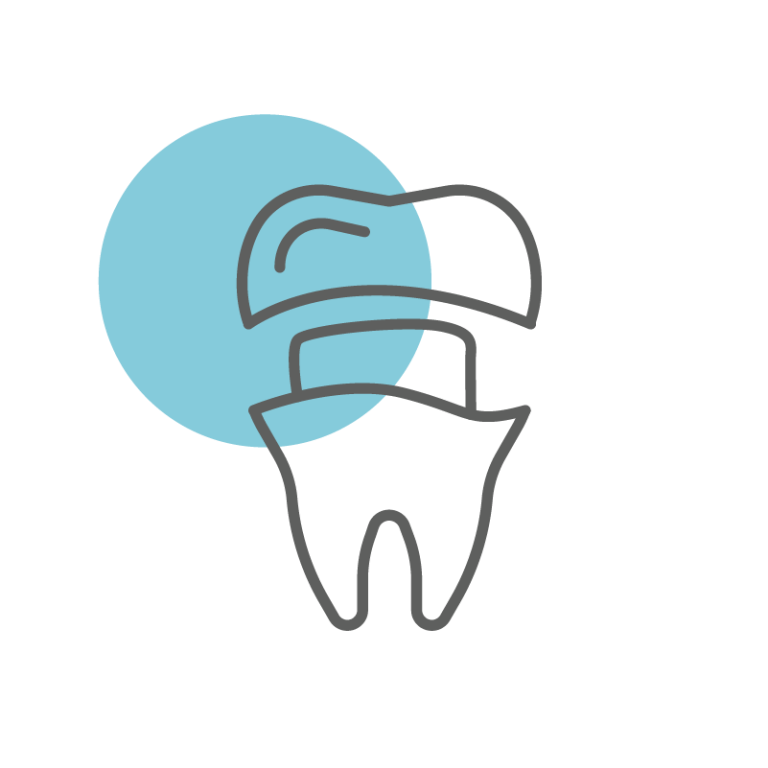
There are many factors which influence how long a crown lasts. Some of these are under our control, like how well we clean around it, how much sugar we consume (and hence how likely we are to develop new decay) Others are not, such as how much tooth was left to work with and how much force is placed on the crown when we bite together. A review of the dental literature (Pjetursson 2007) found a survival rate of 95% at 5 years and 90% at 10 years after placement.
We would usually take an x-ray of the whole tooth before we begin to check the health of the pulp/nerve. At the first visit we will:
• Give you some local anaesthetic.
• Take some digital scans.
• Take a sectional impression.
• Shape the tooth to be crowned.
• Take a scan of the shaped tooth.
• Choose a shade of porcelain that matches your other teeth (and possibly take some photos of this).
• Make a temporary crown to fit over the shaped tooth.
This will take about an hour. The scans are then sent to a dental technician who will make the crown. Each one is made individually to fit you and only you.
On the second visit we will:
• Give you some local anaesthetic.
• Remove the temporary crown.
• Check the fit of the final crown and make any adjustments as required.
• Check that the new crown doesn’t interfere with your bite.
• Check that the shade of the new crown matches your other teeth.
• If we are happy with all of the above then we will use dental cement to join the crown to the tooth.
As you would expect, we’re going to say cleaning well around the crown is essential! This includes cleaning between the teeth where plaque builds up around the edge of the crown. Either floss, spiral brushes or Tepe Easy Picks need to be used daily to keep thoise edges clean.
A diet which is low in sugar will also help reduce the chances of developing decay under the crown. Again, this is standard dental advice!
For crowns on front teeth there is another consideration. Although porcelain is a tough material, it is possible to fracture it if high forces are placed on a small area. You should avoid any habits like biting your nails or sellotape, tearing open packaging with your teeth or biting extremely hard foods on just the crowned tooth.
Our fees for crowns:
See below to meet the staff who perform the procedures on a daily basis.